
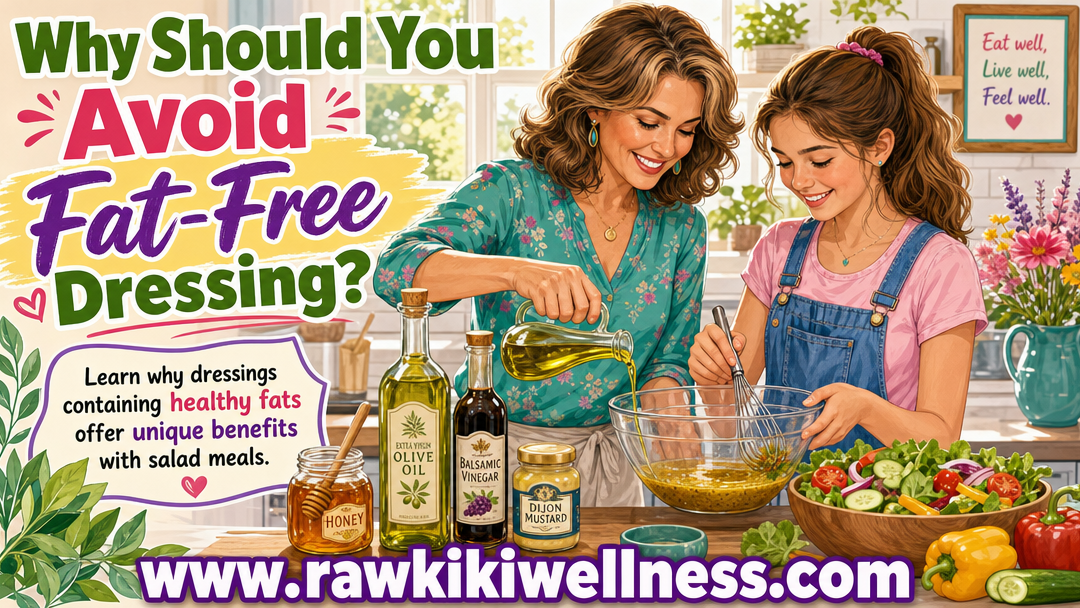
For decades, dieters everywhere have reached for fat-free dressings, making their own long the avalanche of commercial options was introduced to the US commercial market in the late 1980s, with a massive national expansion that peaked in the early 1990s.
This fat-free dressing boom was spearheaded by major corporate brands like Kraft and Wish-Bone, who clearly saw the advantages in following the government’s push for low-fat diets.
When Americans embarked on the 1990s Fat-Free Craze, “fat-free” became the defining food trend of the decade. Brands rapidly pushed new varieties of fat-free dressings into supermarkets nationwide to meet consumer demand. What we now know is that these dressings, engineered to be oil-free, are not, in fact, nutritionally ideal, especially when your salad is a main course meal.
A primary reason these dressings may be ill-advised from a wellness standpoint relates to nutrient absorption, or lack thereof. As noted in a 2004 study in the American Journal of Clinical Nutrition, carotenoid bioavailability is significantly higher from salads treated with full-fat rather than fat-free salad dressings.
In fact, researchers found that virtually no carotenoid absorption occurred when salads with fat-free salad dressing were consumed, as opposed to the substantial absorption of carotenoids from full-fat salad dressing. To gain further insight into the powerful benefits offered by these plant chemicals, check out What’s the Deal with Carotenoids?
If you’re now ready for some delicious dressing options featuring healthy, nourishing fats, consider 100% plant-based options such as this Lemon-Pepper Ranch, this Creamy Chipotle Dressing, this Sunny Citrus Dressing, this Creamy Feng Shui Dressing, or this New Age Caesar Dressing.
Raw Kiki Wellness Newsletter: Your Healthy Life.
Unlock the secrets to vibrant living with Raw Kiki Wellness—subscribe to "Your Healthy Life Newsletter" and transform your wellness journey today! 🌿✨
