
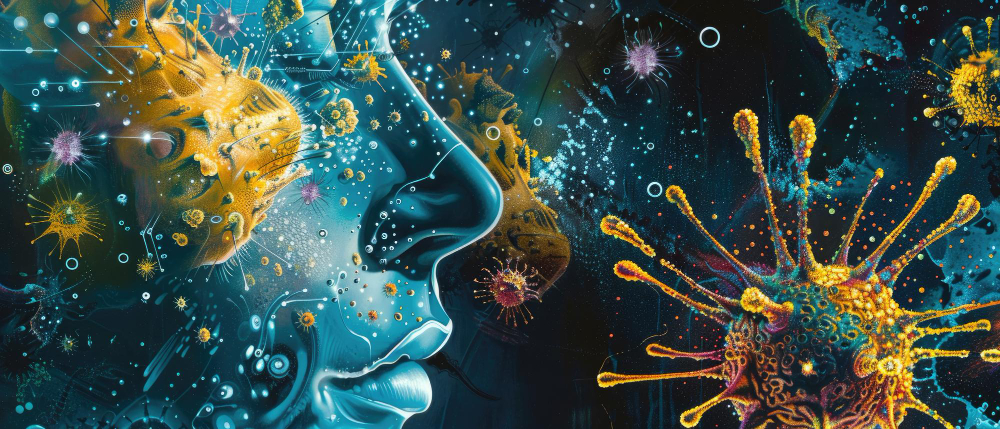
Your immune system is a complex, body-wide network of cells, tissues, and organs that protect you against pathogens like bacteria, viruses, fungi, cancer cells, and more. With weak immunity, viruses and infections can thrive, while an overactive system may lead to allergies and autoimmune disorders.
This system works through two primary mechanisms: your innate immunity and your adaptive immunity. Your innate immunity is your first and most immediate line of defense, which includes physical barriers, like your skin and mucous membranes, as well as “first responder” cells, such as macrophages, which consume dangerous invaders.
Your adaptive immunity is your second line of defense. This more targeted response involves B cells which produce antibodies to neutralize pathogens, and T cells which destroy infected cells. While it takes longer to activate, it is highly effective.
You also have an immune memory. After battling a specific pathogen, your adaptive system creates “memory cells” that allow it to recognize and eliminate the same germ more immediately if it enters the body again. Your bone marrow is also integral to your immune system as it produces immune cells, lymph nodes, your thymus gland which supports T cells, and and the spleen.
This system in action is impressive. It’s continually on the alert for foreign substances called antigens. When detected, “sentinel” cells such as macrophages mount a protective response.
Once your adaptive immune system is triggered, your B cells create antibodies, and T cells are activated. To eliminate pathogens, antibodies place a lock on them, marking them for destruction by other immune cells.
Raw Kiki Wellness Newsletter: Your Healthy Life.
Unlock the secrets to vibrant living with Raw Kiki Wellness—subscribe to "Your Healthy Life Newsletter" and transform your wellness journey today! 🌿✨
