
Did you know that with over 4 billion girls and women in the world, we comprise 49% of the world’s population?
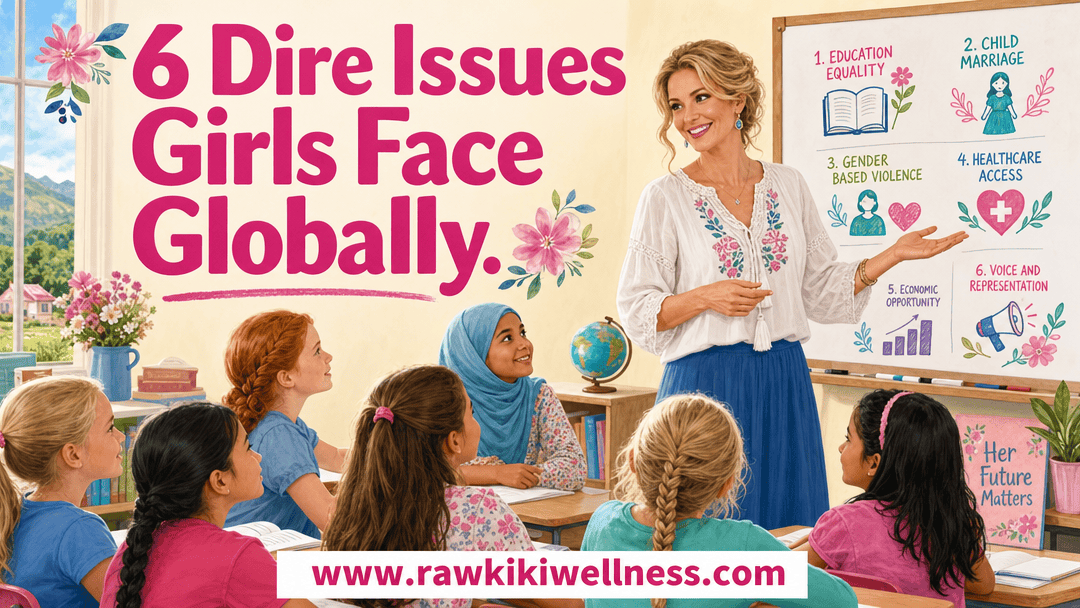
So, how might we describe the plight of girls around the world? As it happens, the forecast is grim for far too many innocent female children and teens. We need to understand the gravity of these challenges for girls everywhere so we can work together as a human family to better support and protect them. Here are 6 of the most formidable challenges young females face:
Forced Child Marriage
Child marriage is when girls are married before the age of 18. Marriage is considered forced if girl children are under the age of consent. Globally, an estimated 12 million girls are married before the age of 18 each year, according to data from the United Nations Population Fund. While boys can be victims of child marriage too, girls make up the vast majority.
Child marriage is invariably harmful to girls mentally, physically, and emotionally. For a start, being wed means young girls are cheated out of their childhoods. The ability to feel carefree and play is abruptly curtailed as new responsibilities fall heavily upon tiny shoulders.
Being forced into sexual intercourse as children is as traumatic and damaging as it is obscenely immoral by any responsible human standard. Many little “wives” must also accept new demanding roles associated with running an adult household, such as shopping, cooking, and cleaning, not to mention baby and childcare which often occurs when these girls are mere children themselves.
These little wives are often confined primarily to the home, disrupting their education and limiting or curtailing their life possibilities−socially, academically, and professionally.
Confined to closed homes and communities places girls at a higher risk of domestic violence in addition to early pregnancy. This exposure to harm and the associated fear and anxiety creates feelings of desperate insecurity and hinders healthy child development on every level.
Menstruation Complications
Millions of young girls around the world live with a lack of both basic health care and credible health education. As a result, girls may be totally unaware of their bodies’ changes or be correctly prepared to handle them and new associated requirements. In addition to a glaring lack of education, many communities still hold a benighted social stigma around menstruation.
As a result, an estimated 500 million women and girls can’t get menstrual products or find safe facilities for managing their hygiene during their periods. Being unable to care for themselves and their personally hygiene properly is referred to as “period poverty.” When girls have poor access to sanitary supplies, they try to make do with rags or paper which also increases health risks. These risks are all multiplied by poor access to safe water.
Health Inequality
Girls around the world face numerous barriers when it comes to caring for their bodies and minds. In addition to child marriage and “period poverty,” many girls lack proper reproductive healthcare, including access to contraception and safe medical guidance.
Additionally, more than 1 billion adolescent girls and women worldwide suffer from undernutrition, micronutrient deficiencies, and/or anemia, according to findings highlighted in reports from organizations like UNICEF.
Girls around the world often face higher rates of interpersonal stress, societal pressures, and exposure to violence or abuse, which heavily correlate with long-term mental health challenges.
How about mental and emotional health? As it happens, females globally experience major depressive disorder and anxiety disorders at roughly twice the rate of males, a trend supported by worldwide data from the World Health Organization Fact Sheet).
Barriers to Education
Millions of girls globally face significant barriers to education, including poverty, child marriage, and deep-rooted cultural discrimination. As a result, too many young females lack the basics. In fact, according to UNESCO, roughly 133 million girls are out of school worldwide.
Poverty also impacts education. Some girls may be forced to work to help support their families. Families with limited funds often prioritize the schooling of boys over girls, viewing sons as future economic support.
Girls also spend significantly more time on unpaid domestic work, such as cooking, cleaning, and caring for younger siblings, leaving little time for studies
Additionally, Millions of girls are married before age 18 or face early pregnancies, which frequently forces them to drop out of school permanently.
Gender-Based Violence and Exploitation
Girls and women are much more likely to suffer from violence. According to the World Health Organization, it’s estimated that 1 in 3 women worldwide have suffered physical and/or sexual partner violence or non-partner sexual violence in their lifetime.
Gender-based violence takes many forms, such as sexual abuse, physical abuse and verbal abuse. Some forms of devastating violence arise from traditional cultural practices, such as female genital mutilation (FGM) and forced marriage.
Exploitation is also a challenge girls and women face globally. For example, girls and women are the most common victims of human trafficking involving sexual exploitation.
Gender-based violence and exploitation inflict profound physical, mental and emotional harm. For many girls, this violence leads to injuries, increased vulnerability to disease and long-term mental health challenges like severe anxiety and PTSD.
Extreme Poverty
Recent data from the United Nations indicates that slightly more girls and women (9.2%) live in extreme poverty compared to boys and men (8.6%). Those who live in it are severely deprived of basic human needs, such as food, safe water, shelter and medical care. Without these basic necessities, every challenge a girl may face, from health risks to violence, is intensified.
Raw Kiki Wellness Newsletter: Your Healthy Life.
Unlock the secrets to vibrant living with Raw Kiki Wellness—subscribe to "Your Healthy Life Newsletter" and transform your wellness journey today! 🌿✨
